

When Immunogenicity Validation Threatens a BLA: Turning a Regulatory Challenge Into a Scientific Solution
In biologics development, immunogenicity assessment is essential to understanding the potential impact of anti-drug antibodies (ADA) and neutralizing antibodies (NAb) on efficacy, pharmacokinetics, safety, and overall benefit-risk.
Yet even a well-established clinical program can face significant regulatory challenges when questions arise about the adequacy of an immunogenicity assay validation strategy.
When Validation Becomes a Regulatory Risk
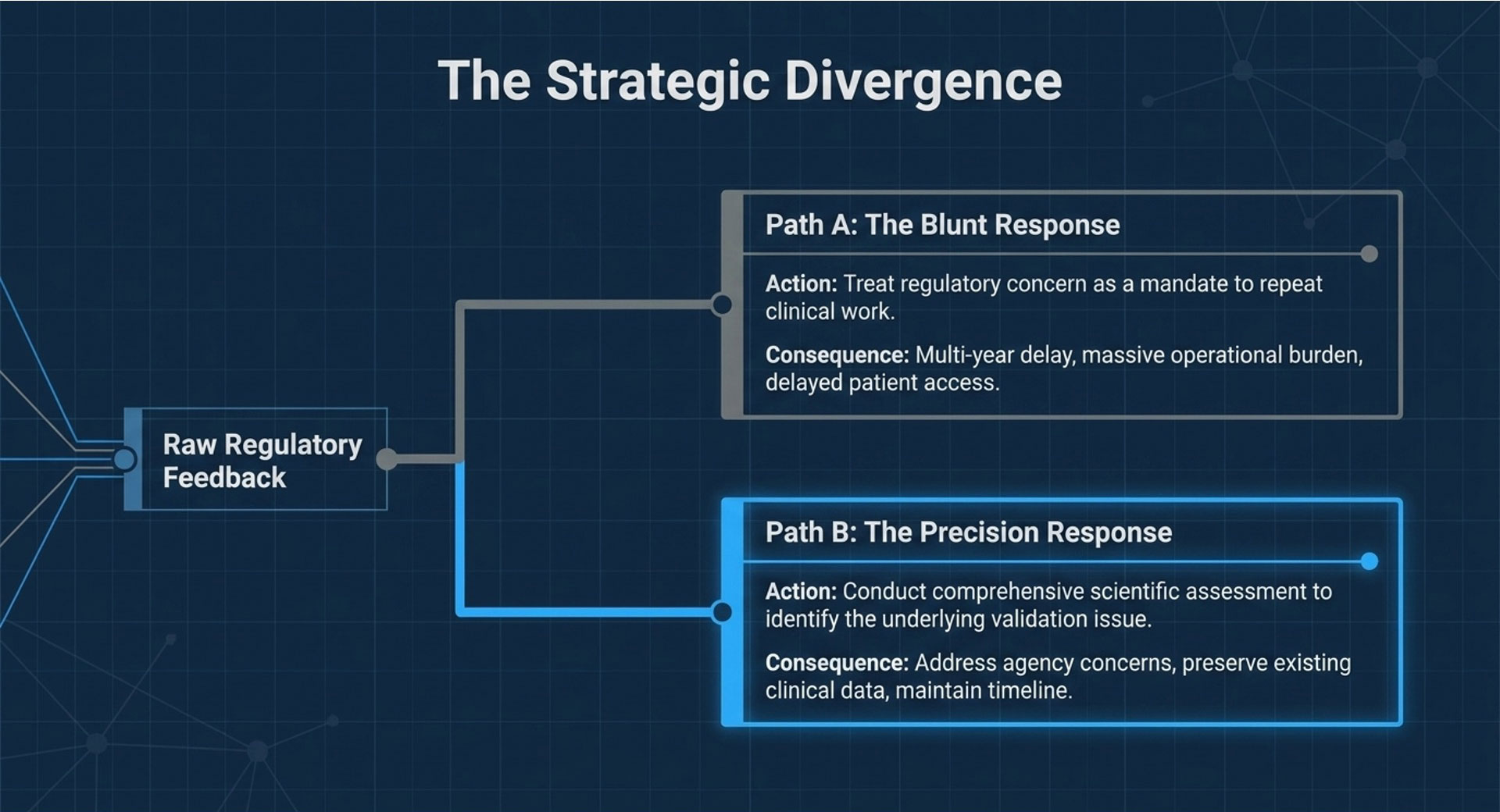
A recent biologics program illustrates how a validation concern can escalate during regulatory review. Questions surrounding the ADA strategy raised concerns about the interpretation and reliability of the immunogenicity data as well as created the potential for substantial additional clinical and operational burden.
The challenge was not simply analytical. It required connecting assay validation, immunogenicity science, statistical interpretation, and regulatory expectations to determine whether the underlying clinical data could still support the submission.
Solving the Root Cause
Rather than treating the regulatory concern as a reason to repeat clinical work, a comprehensive scientific assessment focused on identifying the underlying validation issue was performed.
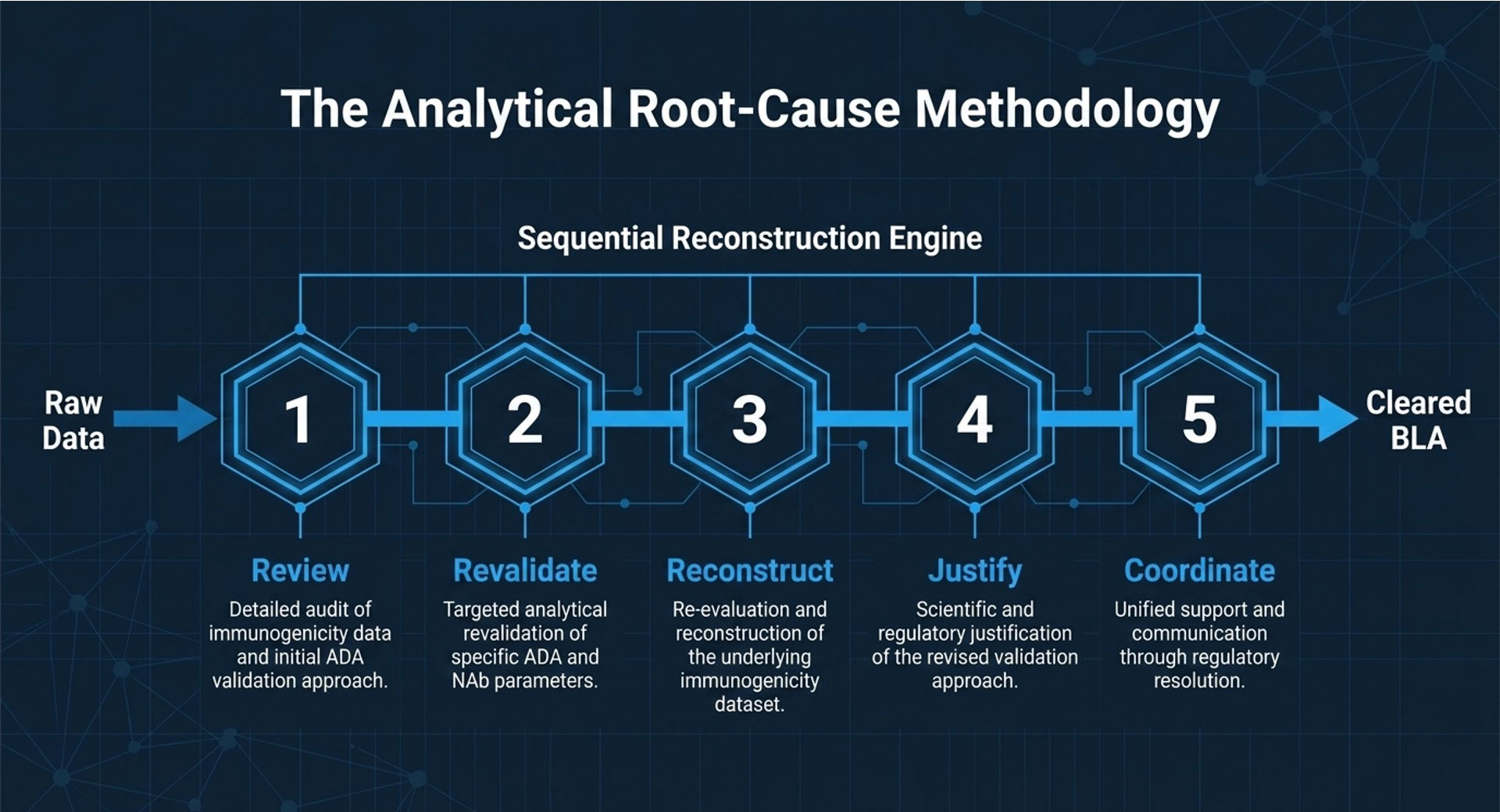
The resulting strategy included:
- Detailed review of the immunogenicity data and ADA validation approach
- Targeted ADA and NAb revalidation
- Reconstruction and assessment of the immunogenicity dataset
- Scientific and regulatory justification of the revised approach
- Coordinated support through regulatory resolution
This evidence-based approach addressed the agency’s concerns without requiring a multi-year repeat of the clinical program. The reconstructed immunogenicity dataset was accepted, supporting regulatory alignment and keeping the program on track for approval and patient access.
Three Lessons for Sponsors
- Immunogenicity strategy should be considered a regulatory strategy.
ADA and NAb assays are not simply laboratory tools. Their design, validation, and interpretation can directly influence the credibility of a regulatory submission. - A regulatory concern does not always require more clinical data.
Before repeating clinical work, sponsors should determine whether the underlying issue can be addressed through a scientifically justified analytical or statistical strategy. - Complex challenges require integrated expertise.
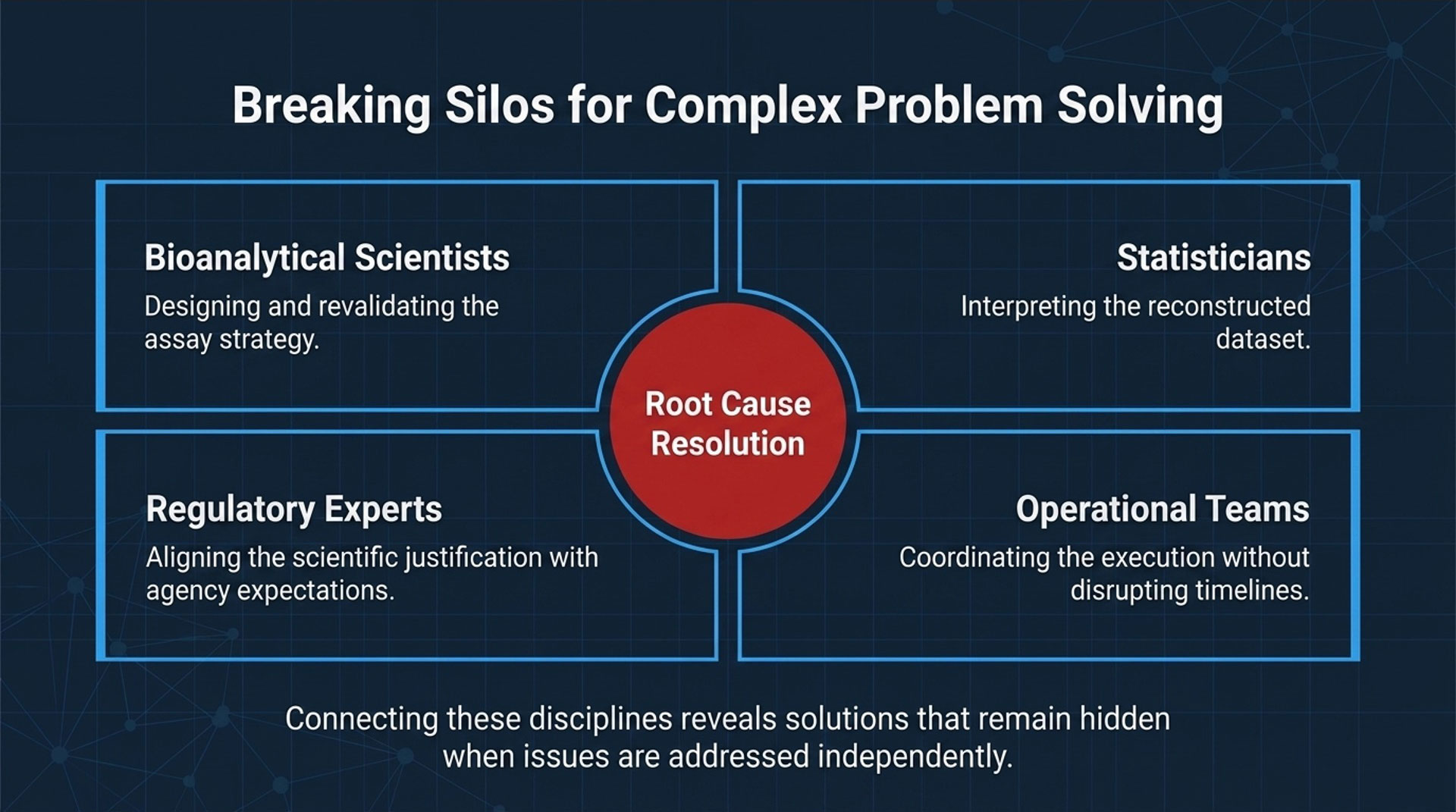
Resolving immunogenicity issues may require coordinated input from bioanalytical scientists, statisticians, regulatory experts, and operational teams. Connecting these disciplines can reveal solutions that may not be apparent when each issue is addressed independently.
The Bigger Takeaway
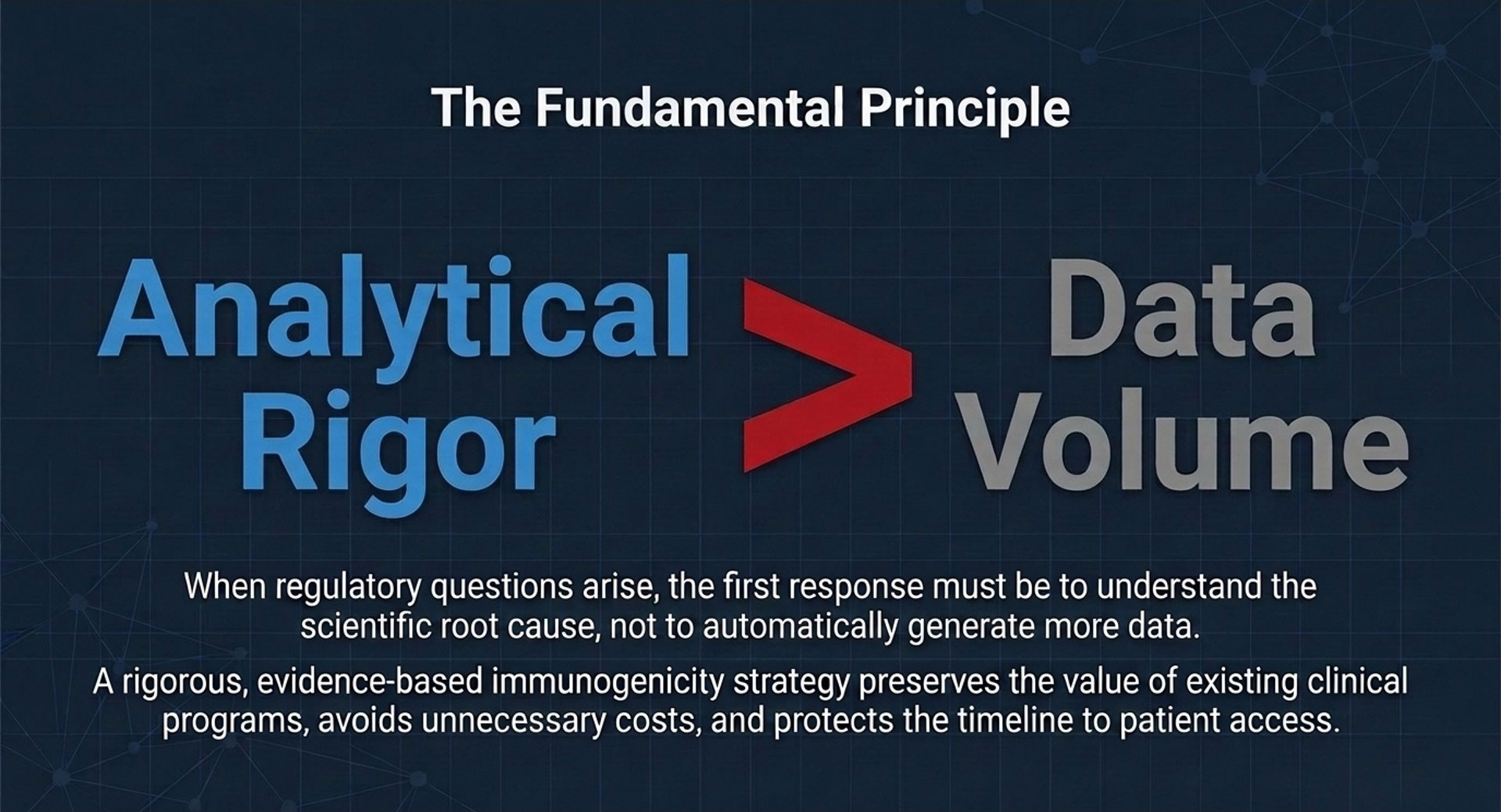
The case demonstrates an important principle for biologics development: when regulatory questions arise, the first response should be to understand the scientific root cause – not automatically generate more data.
A rigorous, evidence-based immunogenicity strategy can sometimes preserve the value of an existing clinical program while addressing regulatory expectations and avoiding unnecessary development delays and costs.
Read the full case study to learn how a targeted ADA and NAb revalidation strategy led to successful regulatory resolution while preserving the integrity of the original clinical program. Read the full case study