
Why Regulatory Agencies Disagree on Immunogenicity Expectations – and How Sponsors Can Respond
Many sponsors assume that a successful regulatory strategy in one region will translate seamlessly across global markets.
Unfortunately, immunogenicity assessment often proves otherwise.
Even when agencies share similar scientific principles, differences in interpretation, risk tolerance, and review priorities can lead to dramatically different expectations regarding ADA validation, neutralizing antibody testing, and immunogenicity data interpretation.
For sponsors pursuing global approvals, understanding and managing these differences is critical.
The Challenge of Global Regulatory Alignment
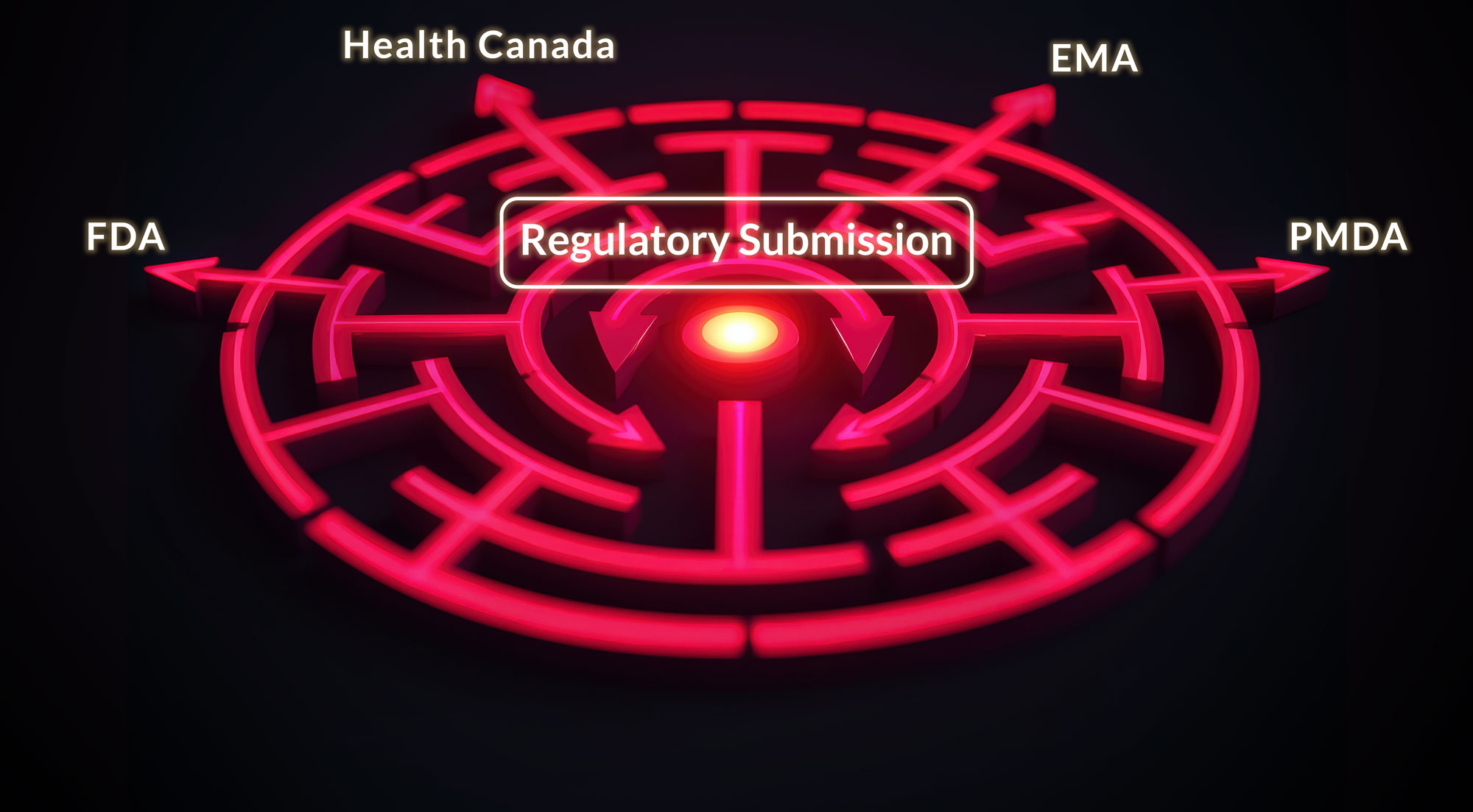
Today’s biologics are routinely submitted to multiple health authorities, including the FDA, EMA, Health Canada, PMDA, and others.
Although international harmonization efforts have improved consistency across regulatory frameworks, immunogenicity remains an area where reviewer expectations can vary considerably.
Questions frequently arise regarding:
- ADA assay sensitivity
- Positive control selection
- Drug tolerance assessments
- Cut point determination
- Neutralizing antibody strategies
- Clinical relevance of observed immune responses
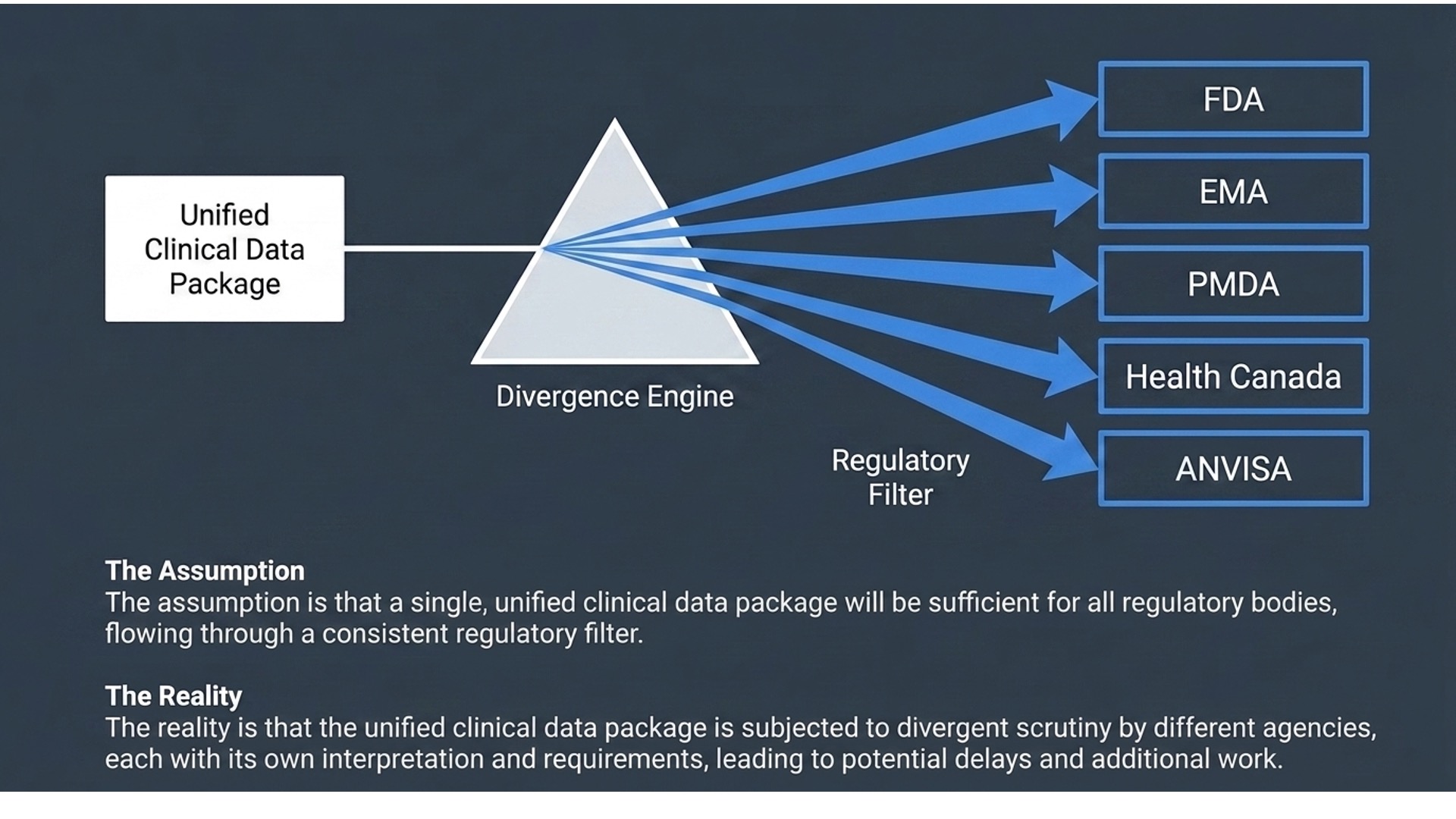
A strategy that satisfies one agency may generate extensive questions from another.
When One Agency Changes Everything
Sponsors occasionally encounter situations where a single agency raises concerns that differ substantially from those of other regulators reviewing the same submission package.
These situations can be particularly challenging because organizations must balance:
- Agency-specific expectations
- Global submission consistency
- Scientific credibility
- Development timelines
In some cases, regulators may request new analyses, additional validation work, or even new clinical data.
Without a clear understanding of the scientific rationale behind the request, sponsors can find themselves pursuing costly activities that may not fully address the underlying concern.
Looking Beyond the Question
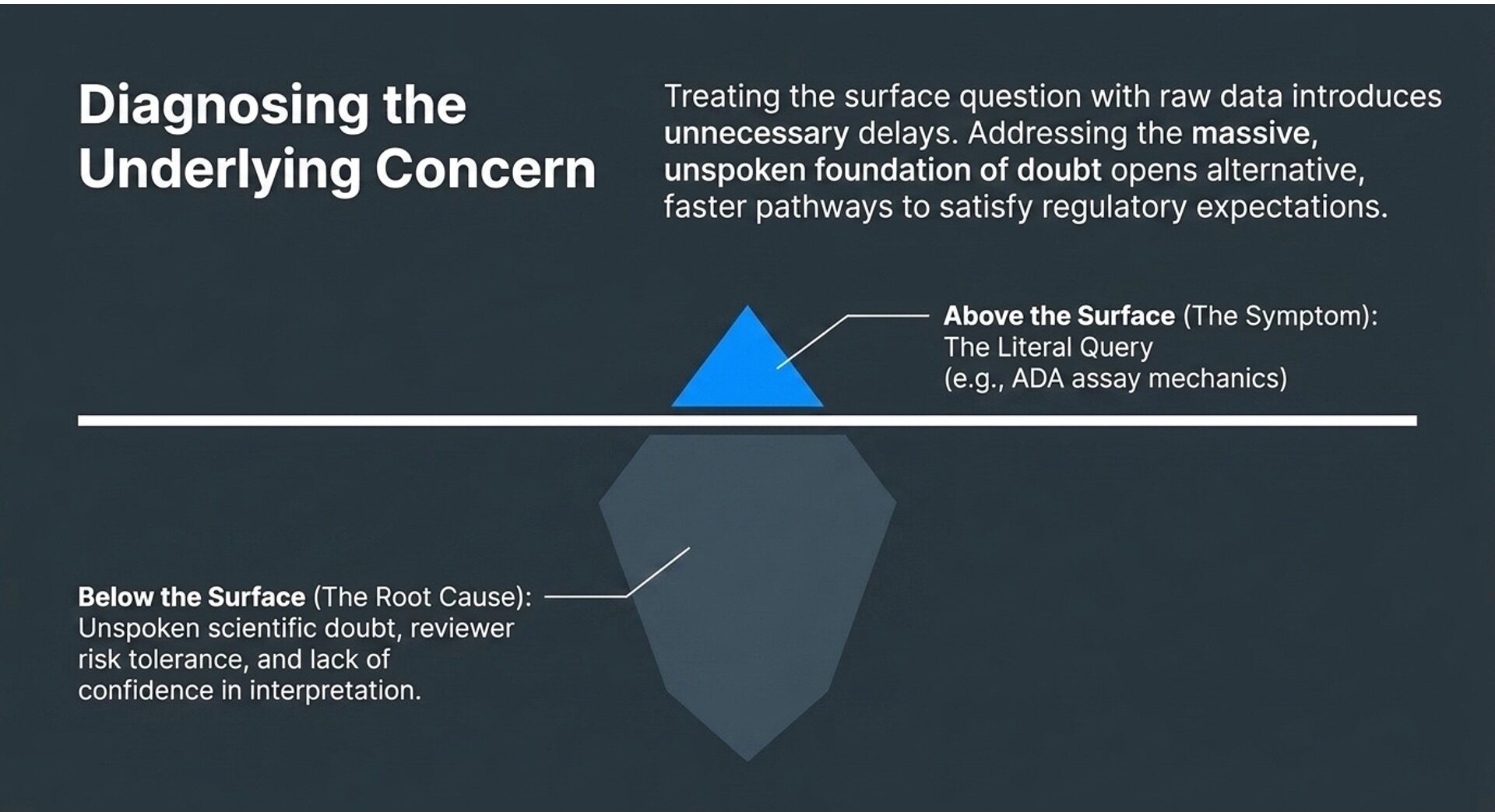
One of the most common mistakes sponsors make is responding only to the regulatory question itself.
The more effective approach is to identify the concern driving the question.
For example, if an agency challenges ADA validation, the true concern may involve confidence in immunogenicity interpretation rather than the validation exercise itself.
Understanding that distinction can open alternative pathways that satisfy regulatory expectations without introducing unnecessary delays.
The Importance of Integrated Expertise
Addressing complex regulatory objections requires more than scientific knowledge.
Successful resolution often depends on combining:
- Immunogenicity expertise
- Regulatory strategy
- Bioanalytical science
- Submission experience
- Operational oversight
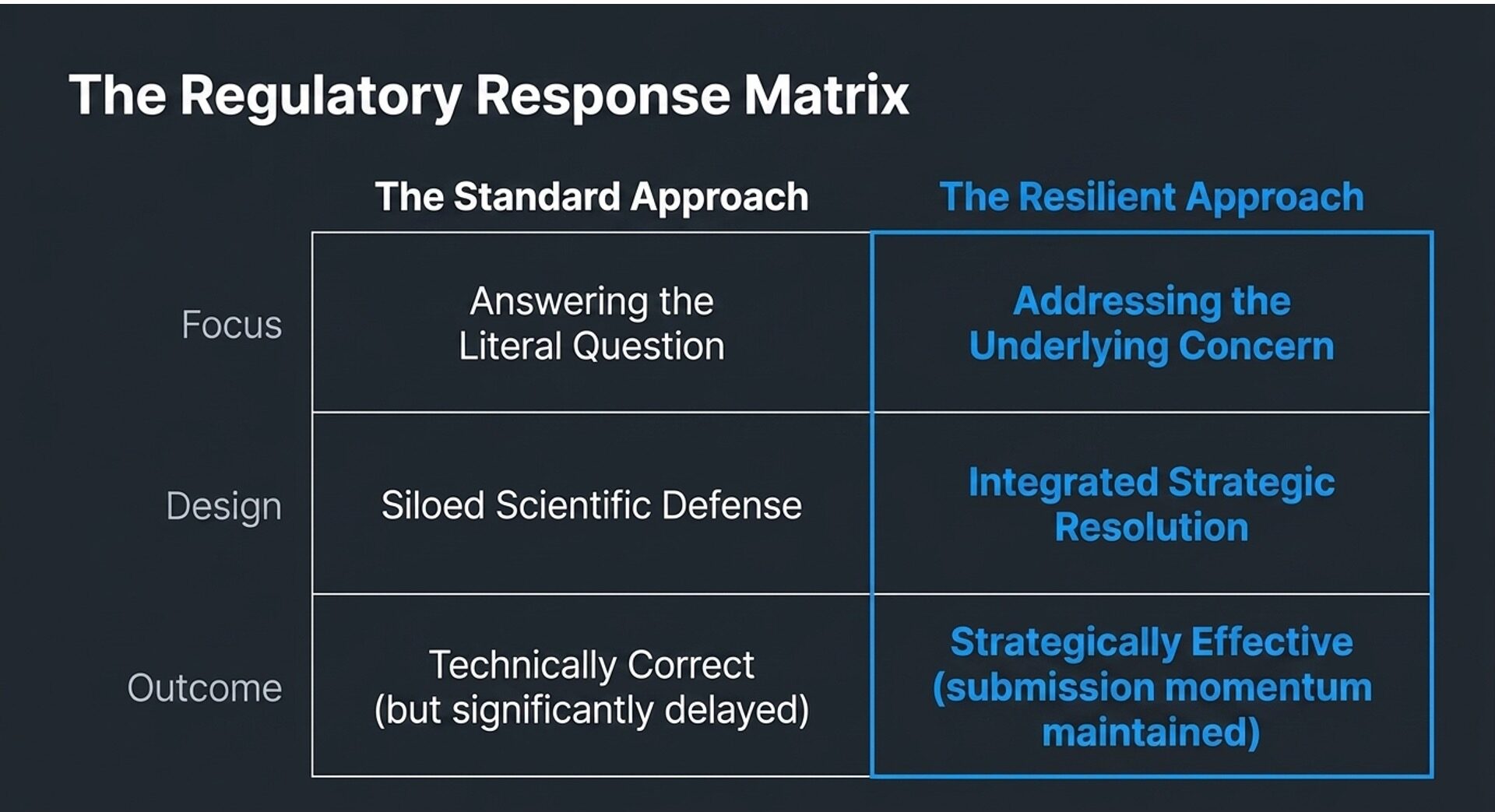
When these disciplines operate independently, sponsors risk developing responses that are technically correct but strategically ineffective.
Conversely, integrated teams can evaluate the scientific evidence, understand regulatory intent, and develop solutions that address both simultaneously.
Building Regulatory Resilience
As biologics pipelines continue to grow, organizations should proactively evaluate whether their immunogenicity strategies are built to withstand varying regulatory interpretations.
Key questions include:
- Are validation decisions adequately documented?
- Can immunogenicity conclusions be scientifically defended?
- Have global regulatory expectations been considered?
- Is there a clear plan for responding to agency challenges?
The answers to these questions can significantly influence approval timelines and submission success.
A Better Model for Complex Programs
The future of regulatory readiness is not simply stronger science or better regulatory writing.
It is the integration of scientific, regulatory, and operational expertise throughout development.
Sponsors that embrace this model are better positioned to navigate unexpected agency feedback, maintain submission momentum, and protect critical development investments.
Learn More
Download the full case study to see how an integrated scientific and regulatory strategy helped resolve a major immunogenicity objection while preserving global approval timelines.