

The Hidden Cost of Weak ADA Validation: Lessons from a Near Clinical Trial Repeat
When discussing development risk, most organizations focus on clinical outcomes, manufacturing challenges, or changing regulatory requirements. Far less attention is given to the hidden risks associated with immunogenicity validation.
Yet ADA assay validation decisions made early in development can have significant consequences years later during regulatory review. In some cases, they can threaten the success of an entire program.
The Real Cost of Immunogenicity Deficiencies
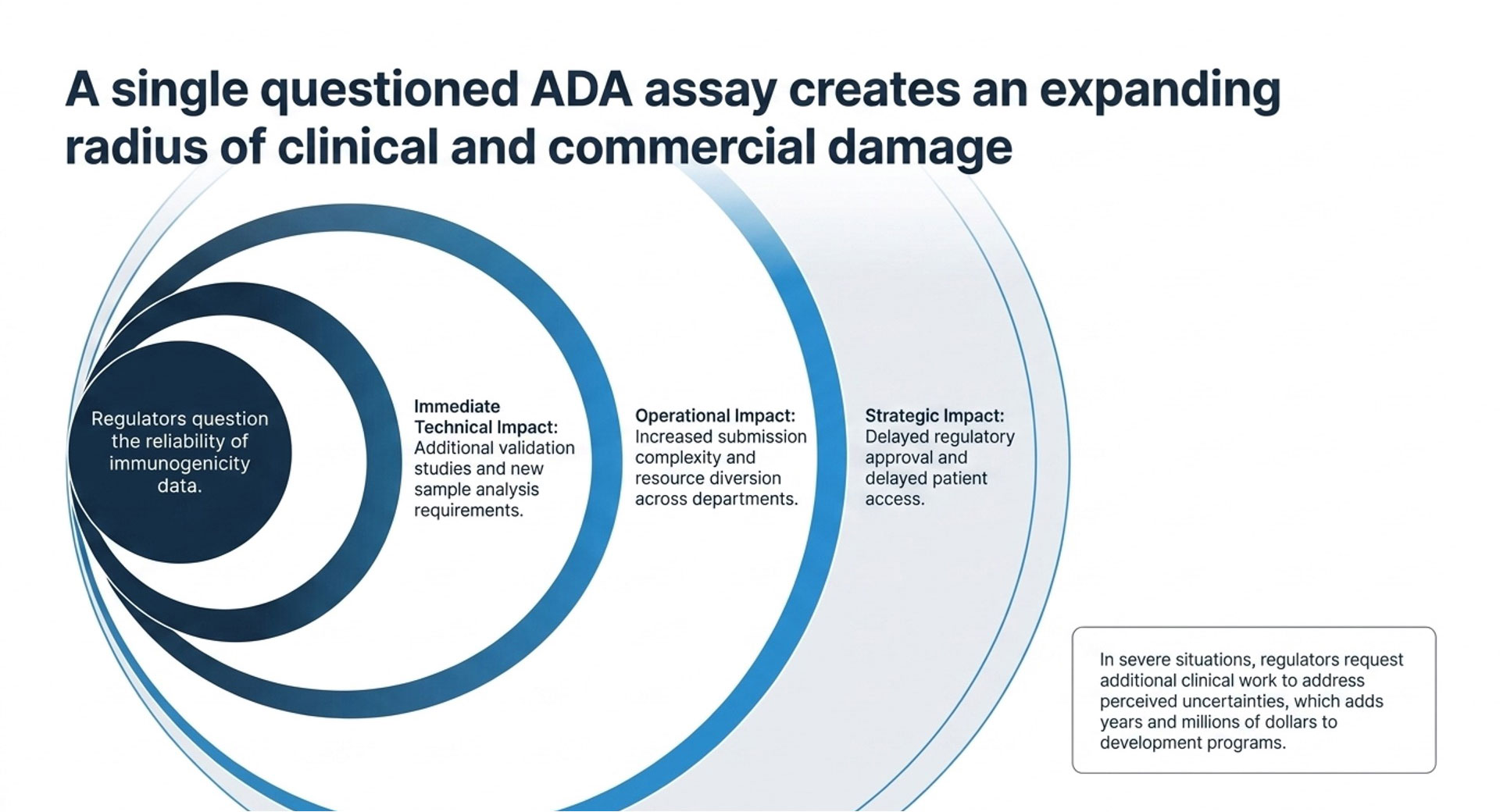
When regulators question the reliability of immunogenicity data, the consequences extend far beyond laboratory testing.
Potential impacts include:
- Delayed regulatory approval
- Additional validation studies
- New sample analysis requirements
- Increased submission complexity
- Resource diversion across departments
- Delayed patient access
In severe situations, regulators may request additional clinical work to address perceived uncertainties. These outcomes can add years and millions of dollars to development programs.
Why ADA Validation Deserves Executive Attention
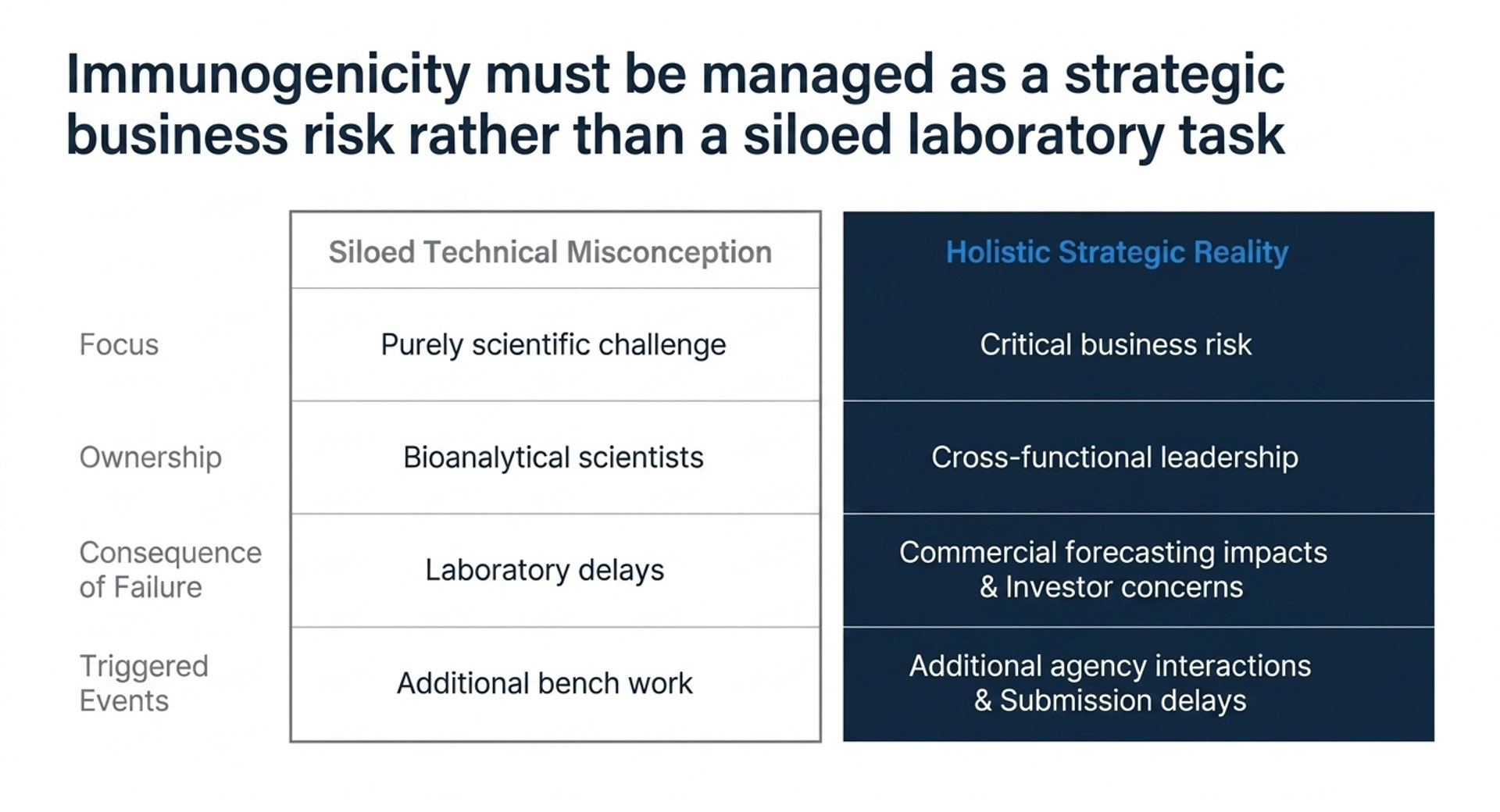
Immunogenicity is often viewed as a specialized technical discipline managed primarily by bioanalytical scientists.
However, validation decisions can influence multiple stakeholder groups, including:
- Regulatory affairs
- Clinical development
- Quality and compliance
- Program management
- Executive leadership
Because immunogenicity findings contribute directly to benefit-risk assessments, regulators expect sponsors to demonstrate confidence in both assay performance and data interpretation. Any perceived weakness can create broader concerns about the overall submission package.
From Technical Issue to Strategic Risk
A common misconception is that immunogenicity challenges are purely scientific. In reality, they frequently become strategic business issues.
A single regulatory objection can trigger:
- Additional agency interactions
- Cross-functional resource demands
- Submission delays
- Commercial forecasting impacts
- Investor concerns
Organizations that recognize this connection early are better equipped to manage risk proactively.
The Value of Root-Cause Analysis
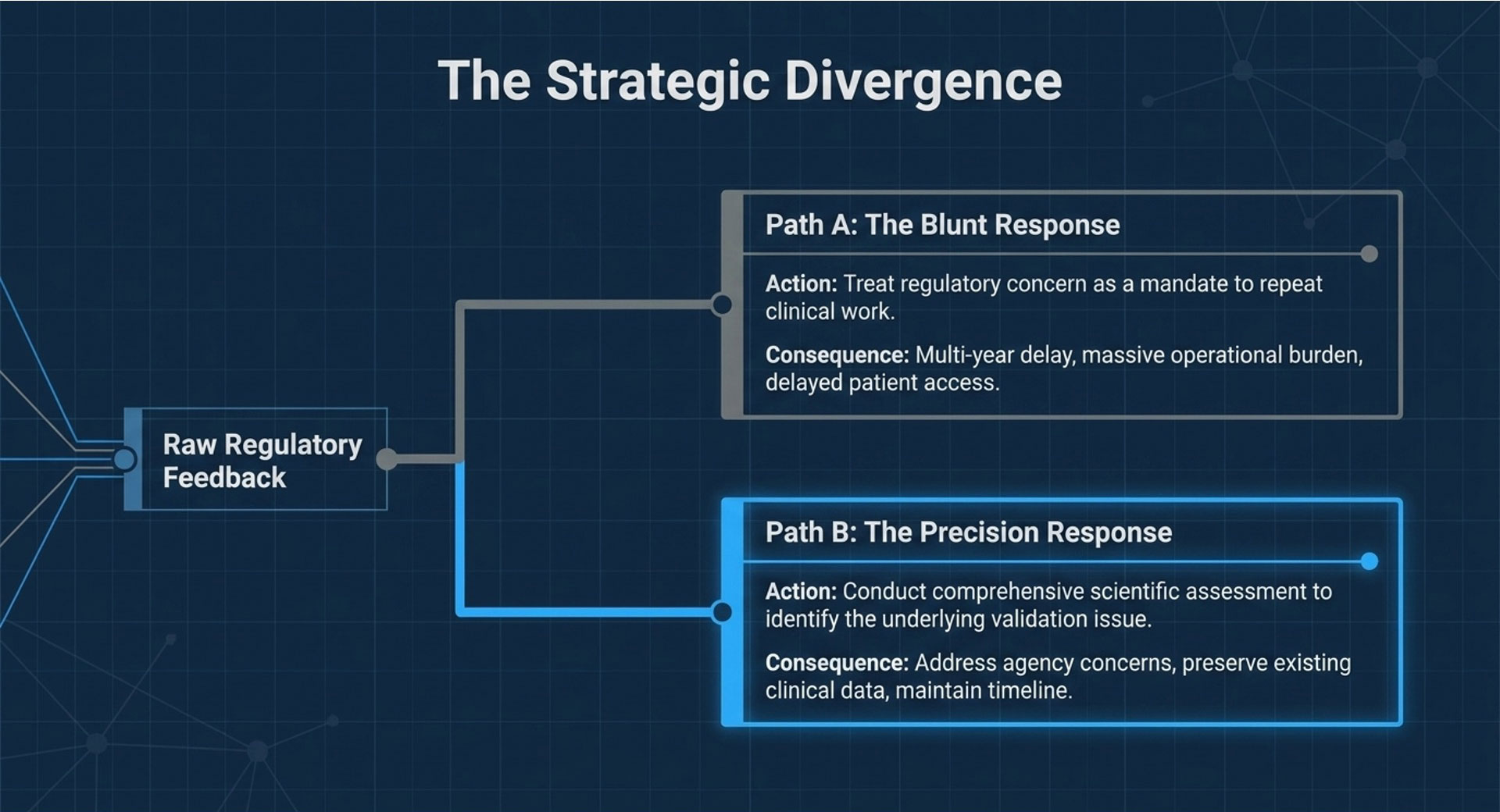
Not every regulatory concern requires extensive new work. The most effective responses often begin with a rigorous evaluation of the underlying scientific issue. By identifying the specific source of regulatory concern, sponsors may uncover opportunities to resolve objections through targeted scientific action rather than broad, expensive remediation efforts. This approach can preserve existing clinical investments while strengthening regulatory confidence.
What Sponsors Can Learn
Three principles consistently emerge from successful regulatory recoveries:
The Competitive Advantage of Integrated Consulting
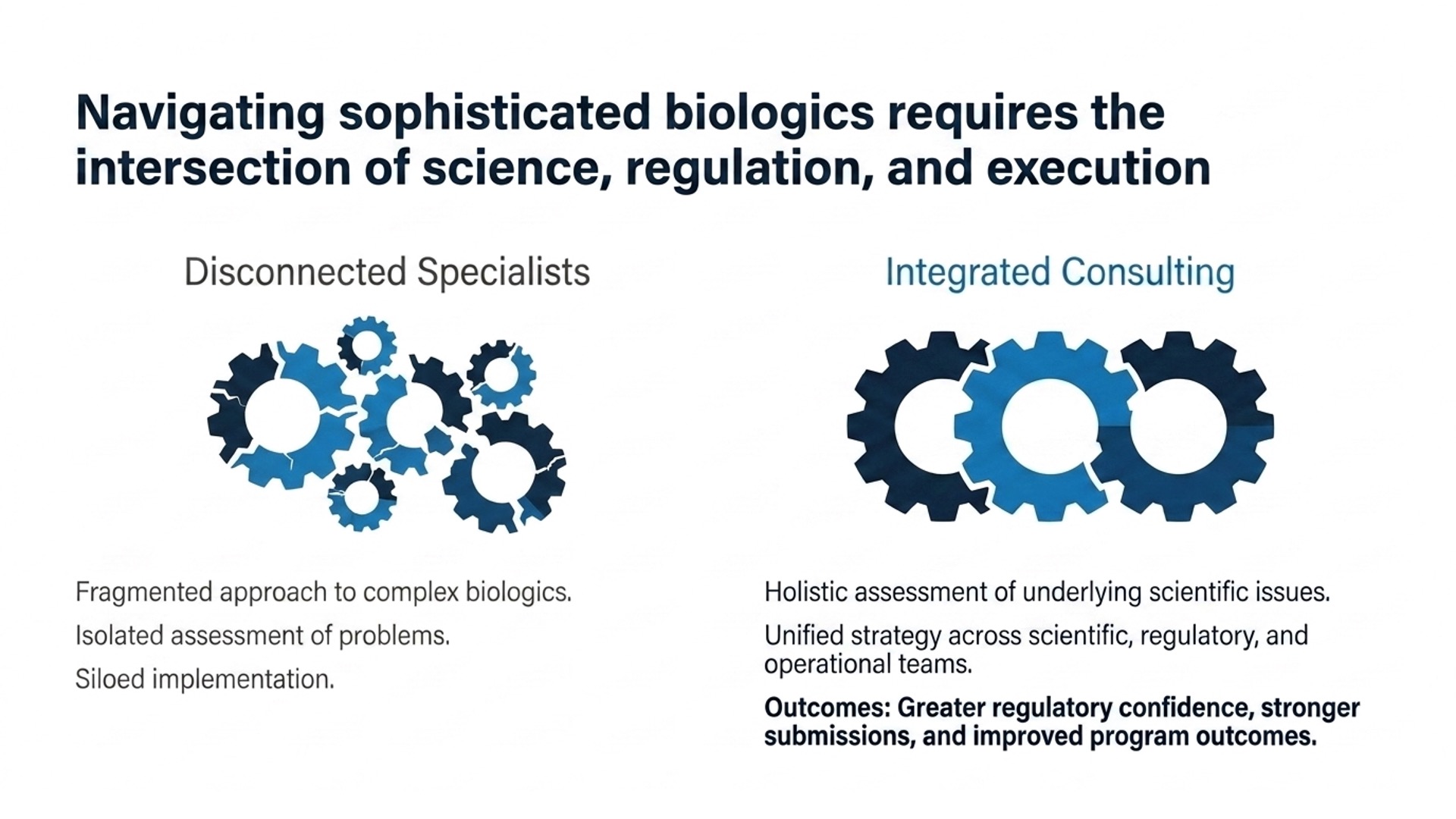
As biologics become more sophisticated, sponsors increasingly need partners capable of navigating the intersection of science, regulation, and execution.
Rather than relying on disconnected specialists, organizations benefit from teams that can assess problems holistically and implement solutions efficiently.
The result is greater regulatory confidence, stronger submissions, and improved program outcomes.
Learn More
Read the full case study to learn how a focused ADA revalidation strategy helped avoid a potential clinical trial repeat, maintain regulatory alignment, and support successful approval.